
Leather vs. Synthetic Motorcycle Gloves: What’s the Difference?
·August 20, 2026
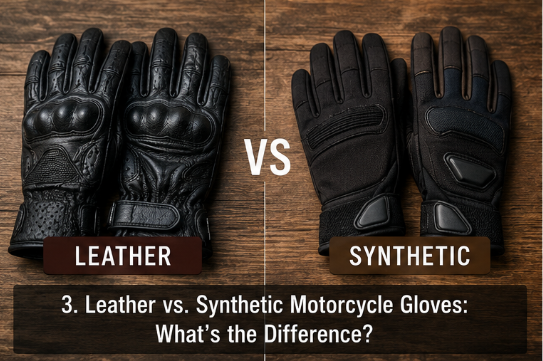
Leather vs. Synthetic Motorcycle Gloves: What’s the Difference?
Choosing the right material is one of the most important decisions when developing or purchasing motorcycle gloves. Leather and synthetic materials are both widely used, but they offer different characteristics in terms of feel, durability, flexibility, appearance, and cost.
For riders, retailers, distributors, and motorcycle glove brands, understanding these differences can help in selecting the right product for a particular market.
Leather Motorcycle Gloves
Leather has been used for motorcycle gloves for many years because of its natural strength, flexibility, and distinctive appearance.
Quality leather can provide a comfortable feel while offering durability for regular riding. It can also develop a unique character over time, which is one reason leather motorcycle gloves remain popular among riders.
Key advantages of leather include:
Excellent durability
Natural flexibility
Comfortable hand feel
Classic appearance
Good resistance to regular wear
Wide range of finishes and colors
Leather can also be manufactured in different weights and finishes, allowing manufacturers to develop gloves for different riding styles and markets.
Synthetic Motorcycle Gloves
Synthetic materials are also commonly used in motorcycle gloves. Depending on the material selected, synthetic gloves can offer advantages such as consistent appearance, lightweight construction, and potentially lower production costs.
Synthetic materials can be engineered for specific characteristics and can be useful when manufacturers need particular performance or design requirements.
Some potential advantages include:
Consistent material appearance
Lightweight construction
Wide range of colors and finishes
Design flexibility
Potentially lower material costs
Easy customization for certain applications
The performance of a synthetic glove depends heavily on the specific material and construction used.
Durability
Durability is an important consideration for motorcycle gloves because riders use them regularly and the gloves can experience repeated movement and friction.
Quality leather is naturally strong and can provide excellent durability when properly selected and manufactured.
Synthetic materials can also be durable, but their performance varies considerably depending on the type and quality of material.
For manufacturers, choosing the correct material for the intended use is therefore essential.
Comfort and Flexibility
Comfort is another important factor.
Leather can provide a natural and flexible feel, and it can gradually conform to the wearer's hand with use. This can make quality leather gloves particularly comfortable for regular riders.
Synthetic materials can also be designed for flexibility and comfort, particularly when combined with suitable patterns, linings, and construction techniques.
The final comfort of a motorcycle glove depends not only on the material but also on the pattern, sizing, stitching, lining, and overall design.
Appearance and Style
For many motorcycle riders, appearance is almost as important as functionality.
Leather has a distinctive appearance that works well with classic, vintage, touring, street, and premium motorcycle glove designs.
Synthetic materials provide manufacturers with considerable freedom when it comes to colors, textures, finishes, and modern styling.
The choice often depends on the target market and the image a brand wants its products to communicate.
Protection and Construction
Material selection is only one part of motorcycle glove design.
Protection can also depend on features such as reinforced palms, knuckle protectors, finger protection, wrist closures, protective panels, and the overall construction of the glove.
For products intended to meet specific motorcycle glove safety standards, the complete product should be appropriately tested and certified according to the requirements of the target market.
Which Material Is Better?
There is no single answer for every rider or business.
Leather can be an excellent choice for customers looking for durability, natural feel, classic style, and premium appearance.
Synthetic materials can be useful for brands seeking particular design characteristics, lightweight construction, consistent appearance, or specific price points.
The best choice depends on the intended application, target customer, design requirements, and market.
Why Leather Remains a Popular Choice
Despite the development of modern synthetic materials, leather continues to have a strong position in the motorcycle glove market.
Its natural combination of strength, flexibility, comfort, and appearance makes it particularly suitable for riders who value traditional craftsmanship and premium materials.
For brands looking to create a distinctive motorcycle glove collection, leather also offers many possibilities for customization through different colors, finishes, perforation, stitching, patterns, and branding.
Choosing the Right Manufacturer
For businesses buying motorcycle gloves, the manufacturing partner can have a significant impact on the final product.
An experienced glove manufacturer should understand material selection, pattern development, cutting, stitching, assembly, finishing, quality inspection, and packaging.
Working directly with a manufacturer can also make it easier to develop custom leather motorcycle gloves according to a brand's specifications.
Conclusion
Both leather and synthetic materials have their own advantages in motorcycle glove manufacturing.
Leather remains a popular choice because of its durability, flexibility, comfort, and timeless appearance. Synthetic materials can provide useful alternatives for brands and customers with different design, performance, and pricing requirements.
Ultimately, the right motorcycle glove depends on the intended use and the quality of the material and manufacturing process.
For businesses seeking customized leather motorcycle gloves, choosing an experienced manufacturer can help ensure consistent quality and products designed for their target market.
leather motorcycle glovessynthetic motorcycle glovesleather vs synthetic glovesbiker glovesmotorcycle glovesleather biker glovesmotorcycle glove manufacturerleather glove manufacturercustom motorcycle gloves